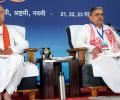
RSS General Secretary Dattatreya Hosabale has criticized the Karnataka government's decision to provide four per cent reservation for Muslims in government contracts, stating that the Constitution does not allow religion-based quotas. He also said that such reservations go against the wishes of B R Ambedkar, the architect of the Indian Constitution. He also spoke about the controversy over Mughal emperor Aurangzeb's grave in Maharashtra, stating that people who went against the ethos of India were made icons. Hosabale lauded figures like Rajput king Maharana Pratap for resisting Mughal emperor Akbar and said those who resisted invaders were also "freedom fighters". He also spoke about the RSS's idea of 'One Nation, One Culture', stating that it draws inspiration from India's rich cultural heritage and ethos.

The CJI got irked when the lawyer first sought an early hearing of his case and, after being told that it will be listed on April 17, asked for liberty to mention it before another bench.

The "construct of the DPDP Act" cannot be changed at this stage, though there may be some minor tweaks in the language of the Rules and formats in certain legitimate cases.
Four days after the top court cleared 10 bills, which were stalled and reserved by Tamil Nadu Governor R N Ravi for the president's consideration, and set a timeline for all governors to act on the bills passed by the state assemblies, the judgement running into 415 pages was uploaded on the apex court's website at 10.54 pm on Friday.
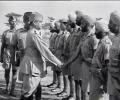
Descendants of Netaji Subhas Chandra Bose claim they have documentary evidence to prove that the Renkoji temple authorities in Japan have always been willing to hand over the 'ashes' believed to be his, refuting perceptions of roadblocks to their repatriation. They assert that successive Indian governments have shown little interest in retrieving the remains and conducting DNA tests, despite numerous appeals from the family. The article highlights the conflicting reports and controversies surrounding Netaji's death and the ongoing mystery surrounding his remains.
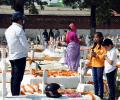
The Supreme Court of India expressed its disappointment and concern after a man was denied the right to bury his Christian father in a Chhattisgarh village, despite the presence of a designated burial area for Christians in the village graveyard. The man, Ramesh Baghel, had to approach the Supreme Court after the Chhattisgarh High Court dismissed his plea, citing concerns about potential unrest. The court criticized the high court's decision and the lack of action by local authorities in resolving the issue, noting that the body had remained in the morgue since January 7th. The case highlights a growing concern about religious intolerance and the need for greater sensitivity and respect for diverse communities in India.

The decision, which comes after a meeting with top government officials, marks a new phase in the easing of internet blockades that have restricted access to major global platforms for some time.

The Supreme Court of India has reprimanded the Tamil Nadu Pollution Control Board (TNPCB) for delaying legal action against Isha Foundation, a yoga and meditation center founded by Sadhguru Jaggi Vasudev, over alleged environmental violations. The court criticized the TNPCB for taking two years to challenge a Madras High Court ruling that quashed a showcause notice against the foundation. The court also emphasized the importance of environmental compliance for the yoga center, noting that it must meet all necessary parameters. The case highlights ongoing legal challenges and environmental concerns related to the Isha Foundation's activities.
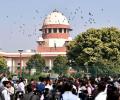
The Supreme Court has said police cannot serve notices to accused persons through WhatsApp or other electronic modes under the Criminal Procedure Code or Bhartiya Nagrik Suraksha Sanhita, 2023.
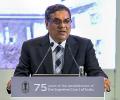
Justice Sanjiv Khanna 'belongs to that school of legal luminaries who give the highest primacy to facts.'

Over the medium and long term, the BJP hopes to devour the AIADMK, they having identified the party as 'ideologically not as sound as the DMK', predicts N Sathiya Moorthy.
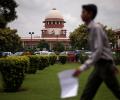
The Supreme Court of India has ordered the burial of a pastor whose body has been lying in a mortuary since January 7th, after a dispute arose regarding the location of his burial. The court issued a split verdict, with one judge ruling for burial on the family's private land and the other for a designated place away from the village. The decision was made due to the prolonged delay in the burial and the potential for unrest. The court ordered the state government to provide security to prevent any further incidents.

The Central Bureau of Investigation (CBI) has sent a judicial request to the United States seeking information from private investigator Michael Hershman, who has claimed to possess crucial details about the Rs 64-crore Bofors bribery scandal of the 1980s. Hershman, the head of the Fairfax Group, had previously expressed his willingness to share information with Indian agencies, alleging that the investigation into the scam was derailed by the then Congress government. The CBI's request comes after previous attempts to obtain information from US authorities yielded no results. This move highlights the continued efforts to uncover the truth behind the decades-old scandal, which has had a significant impact on Indian politics.
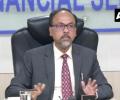
New India Assurance and Niva Bupa have invested in the Bima Sugam India Federation.
The Supreme Court of India will examine the age limits for surrogate mothers and other provisions of the Surrogacy Regulation Act and Assisted Reproductive Technology (Regulation) Act on February 11. The court has asked the government to file its written submissions on the matter. The laws set age limits for intended parents and surrogate mothers, restricting commercial surrogacy and emphasizing altruistic surrogacy. The court is also considering alternative mechanisms for compensating surrogate mothers and has proposed a designated authority for disbursing payments instead of intended couples.
The United States has approved the extradition of Tahawwur Rana, accused of involvement in the 2008 Mumbai terror attacks, to India. The decision was announced by President Donald Trump during a joint press conference with Prime Minister Narendra Modi in the White House. India is currently working on the logistics of Rana's surrender and extradition, with several final steps to be completed before he is sent back to India. The joint statement issued by India and the US during Prime Minister Modi's visit reaffirmed their commitment to fighting terrorism and eliminating terrorist safe havens. The leaders also called on Pakistan to bring to justice the perpetrators of the 26/11 Mumbai and Pathankot attacks. Rana, a Canadian national of Pakistani origin, is currently lodged at a metropolitan detention center in Los Angeles. He is associated with Pakistani-American terrorist David Coleman Headley, one of the main conspirators of the 26/11 attacks.

On Friday, a four-member team of the ASI surveyed the recently-discovered Shri Kartik Mahadev temple, five pilgrimage sites and 19 'koops' (wells).

Gyanesh Kumar, a 1988-batch Kerala Cadre IAS officer, has been appointed as the next Chief Election Commissioner (CEC) of India. Kumar, who was previously an Election Commissioner, will serve until January 26, 2029. His appointment comes amidst controversy as the Congress party demanded the government defer its decision until the Supreme Court concludes its hearing on a petition challenging the composition of the selection panel. Kumar's tenure will see him oversee several state assembly elections, including Bihar, Kerala, Puducherry, Tamil Nadu, and West Bengal.
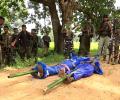
'Many of them are mutilated beyond recognition. Every day an encounter takes place.' 'Bastar has been burnt to ash.'

The Supreme Court of India expressed shock and disappointment at the Indian government's failure to implement the Dam Safety Act, enacted in 2021. The court highlighted the lack of progress in constituting a national committee for dam safety and formulating regulations despite the law's provisions. The case pertains to the safety of the Mullaperiyar Dam, a 130-year-old structure in Kerala, which is controlled by Tamil Nadu. The court has ordered the government to take immediate action and seek assistance from the Attorney General in this matter.
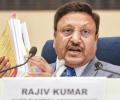
Outgoing Chief Election Commissioner Rajiv Kumar has expressed concerns about long-pending cases questioning electoral processes, arguing they fuel distrust and should be scheduled with consideration for election periods. He also advocated for enhanced transparency in political promises, with clear disclosures on financial viability and impact on state finances. Kumar further stressed the need for a totaliser system to maintain polling station-wise voting confidentiality and urged the empowerment of NRIs to vote remotely. He highlighted the potential of biometric authentication and technology to address issues like impersonation and multiple voting.

The Supreme Court of India has ordered a status quo on a private well located near the entrance of the Sambhal Jama Masjid, prohibiting any action regarding the well without its permission. The order came in response to a plea by the mosque's management committee, which challenged a lower court order that allowed a survey of the mosque, citing concerns over violence and loss of life during previous surveys. The court also instructed the authorities to file a status report within two weeks.
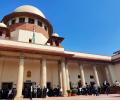
The observations came while upholding the constitutional validity of Section 6A of the Citizenship Act which grants Indian citizenship to immigrants from Bangladesh who entered Assam on or after January 1, 1966 but before March 25, 1971.
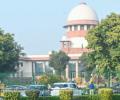
The Supreme Court on Wednesday deprecated the practice of announcing freebies prior to elections, and said people were not willing to work as they were getting free ration and money.

Can ordinary citizens counter this backward march? Can peace activists ensure that the two communities retain their bonds? Do they have a choice, asks Jyoti Punwani.

'The BJP lacks a credible mass leader who matches Mamata Banerjee's popularity.' 'Given the division of votes among Opposition parties, the West Bengal government's dole-giving strategy, and the consolidation of the poor, significant sections of scheduled caste groups and Muslim minorities behind the ruling party, it will be difficult to dislodge the Trinamool from power.'

The Supreme Court of India censured the Assam government for keeping persons declared foreigners in detention centers indefinitely and not deporting them. The court questioned the state's explanation for not sending nationality verification forms to the Ministry of External Affairs, stating that detainees should be deported immediately once identified as foreigners. The court directed the Assam government to initiate the deportation process of 63 declared foreign nationals whose nationality was known and file a status report in two weeks. The court also directed the Centre to provide details of those deported and how it plans to deal with detainees whose nationality is unknown.
Justice Khanna was elevated as an additional judge of the Delhi high court in 2005 and was made a permanent judge in 2006. He was elevated as a judge of the Supreme Court on January 18, 2019.
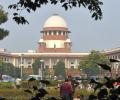
The Supreme Court of India has sought the Indian government's response to a petition filed by a Muslim woman seeking to be governed by the Indian succession law instead of Shariat. The woman, Safiya P.M., argues that she does not believe in Shariat and wants to be governed by secular law, including the Indian Succession Act of 1925. The court has asked the government to file a counter affidavit within four weeks.
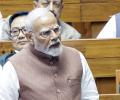
Besides the not-so-hidden unease between Modi and Adityanath, Modi chose to address the Lok Sabha to ensure that he could personally claim all the kudos, observes Nilanjan Mukhopadhyay.

The Supreme Court of India has issued pan-India guidelines on property demolition, emphasizing that no property should be demolished without a prior show cause notice and 15 days for the affected party to respond. The court strongly criticized 'bulldozer justice', stating that the Executive cannot demolish homes simply because individuals are accused of a crime. The verdict cites the importance of shelter as a fundamental right and highlights the unconstitutionality of demolishing houses based solely on accusations or convictions.

Following the Supreme Court's verdict on bulldozer action, victims of demolition drives in Uttar Pradesh are seeking compensation for their losses. The court ruled against arbitrary demolitions without prior notice, prompting victims to pursue legal action. The Uttar Pradesh government maintains that demolitions were carried out following due process and on properties built on encroached lands.

Reversing the burden of evidence means that the principle of innocent until proven guilty does not apply. It is exactly the opposite: Guilty as charged, until you can convince the judges of the contrary, points out Shekhar Gupta.
Swamy Shraddananda, jailed for 30 years for killing his wife, has moved the Supreme Court seeking authorities to decide his mercy plea before the President in December, 2023.
Given the possibilities that next year's assembly elections could throw up, Stalin told the state assembly that an interim report had to be submitted by January 2026. The outcomes may well find its way into the DMK's poll manifesto, thus seeking to keep the electoral focus still on the BJP-ruled Centre and Prime Minister Modi, observes N Sathiya Moorthy.

In a lengthy statement on X late Monday night, a defiant Kamra said those busy leaking his number on social media or calling him incessantly should know that it all goes to his voicemail where they will be subjected to "the very song" that they hate.
The Bombay High Court has imposed a cost of Rs 1 lakh on former cricket administrator Lalit Modi while dismissing his petition seeking an order to BCCI to pay penalty of Rs 10.65 crore imposed on him by ED for violating Foreign Exchange Management Act (FEMA).
The Delhi High Court has reserved its order on a plea by jailed MP Rashid Engineer, facing trial in a terror funding case, seeking custody parole to attend the ongoing Parliament session. Engineer, a Baramulla MP, was opposed by the National Investigation Agency (NIA) who argued that he has no vested right to attend Parliament and there were security concerns. The court said though there might not be a vested right to attend the session, it could exercise its discretion. The NIA also argued that Rashid misused the telephone facility in Tihar jail and that allowing him to attend the session would be a security risk.

The Supreme Court on Thursday refused to entertain a plea alleging contempt of its order on demolition of properties by the authorities in Uttarakhand, Rajasthan and Uttar Pradesh.
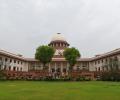
The Supreme Court on Thursday said the executive and the legislature would decide whether persons, who had availed quota benefits and were in a position to compete with others, were to be excluded from reservation.
 © 2026 Rediff.com - Advertise with us - Disclaimer - Privacy Policy - Sitemap - Feedback - About us - Terms of use - Grievances